


BDI Data Drop 🚨 From Equity to Erasure Black-owned Replacements
From fashion to music to the overall swagger across every major sports league, so much of what’s branded as “Gen Z culture” is really Black culture. PepsiCo has long known this — from Gatorade’s iconic sports equity campaigns, to Doritos’ hip-hop collaborations, to Pepsi’s NFL hype spots featuring Black artists and athletes. Black culture has powered PepsiCo’s marketing for decades.

But in February 2025, PepsiCo became one of many corporations to retreat under political pressure, scaling back its Diversity, Equity & Inclusion commitments. The company eliminated race-specific representation goals for both its workforce and suppliers, and collapsed DEI leadership into a broader “engagement” role.
That retreat sets the tone for PepsiCo’s 2024 ESG Report, released August 28, 2025 — a document that reflects this new anti-DEI era.
By the numbers, the language tells the story:
0 mentions of “Diversity” (as in Diversity, Equity, & Inclusion; -16 YoY)
0 mentions of “Black” in relation to people (-4 YoY)
7 mentions of “Equity” (all tied to gender pay or sports; (-10 YoY)
8 mentions of “Inclusion” (broad, rebranded as Inclusion for Growth; -2 YoY)
1 mention of “Underrepresented” (limited to farmers; Flat YoY)
Digging deeper into the substance…
Black Representation
In 2023, PepsiCo set a goal to “achieve 10% Black representation in U.S. managerial populations by 2025. In their 2024 report, no updates have been provided for this metric or their overall workforce; however, earlier this year, PepsiCo published their 2023 EEO-1 report, which included the following:
Total Workforce: 29,774/130,125 (23% Black; 9.5% YoY)
First/Mid-Level Managers: 2,233/17,989 (12.4% Black; 5% YoY)
Executive/Senior Level Officials and Managers: 33/428 (7.7% Black; -6% YoY)
Additionally:
Leadership
PepsiCo
: 1/11 (9% Black) — Steven Williams is CEO of PepsiCo North America, a $48B business spanning Foods and Beverages with 125,000 employees and 900 locations. Since joining PepsiCo in 2001 through its Quaker Oats acquisition, he has led divisions including Frito-Lay and Quaker, driving growth through snack innovation, plant-based expansion, and sustainability efforts like compostable packaging and EV trucks. He previously managed PepsiCo’s Walmart global business and today serves on boards including State Farm, United Way of Dallas, and UT Southwestern.
Leadership
PepsiCo
: 3/15 (20% Black): Segun Agbaje: Group Chief Executive Officer, Guaranty Trust Holding Company Plc (GTCO Plc) Edith W. Cooper: Former Executive Vice President and Global Head, Human Capital Management, The Goldman Sachs Group, Inc. Darren Walker: President, Ford Foundation (We previously
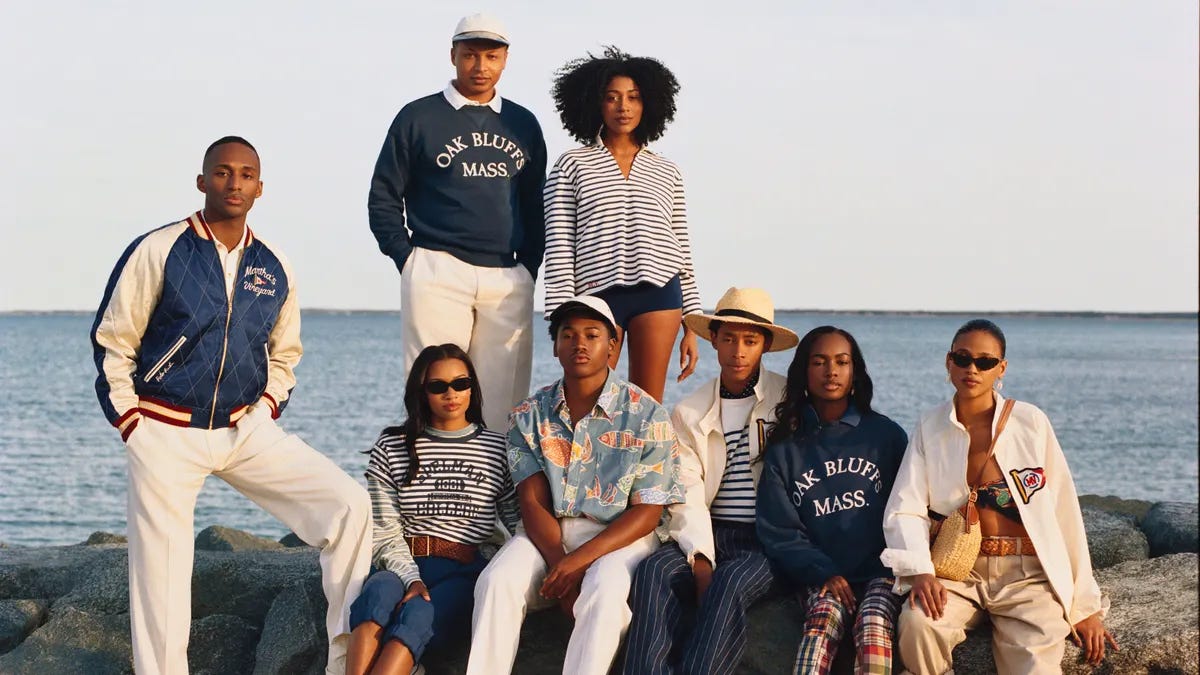
The Black Equity Woven Into Ralph Lauren's Oak Bluffs Collection
Behind the campaign lies investment in Black talent, culture, and community—from HBCUs to Health.
acknowledged his position on Ralph Lauren’s board)
BDI POV: PepsiCo met its Black manager goal at mid-levels, but progress stalls higher up. With no 2024 workforce data, its leadership equity is unclear. The presence of Steven Williams in the C-suite and three Black directors on the board is meaningful — and raises the expectation that they push for greater transparency.
Culture & Policy
In PepsiCo’s 2024 ESG report, PepsiCo rebrands their DEI work as “Inclusion for Growth”, a broad framework organized under three pillars: People, Business, and Community. The language emphasizes volunteerism, employee resource groups (ERGs), and learning programs but avoids race-specific initiatives or accountability metrics.
Policy Highlights in 2024:
Gender Pay Equity: PepsiCo reports that women and men are paid within 1% of each other globally. No disclosure on racial pay equity or audits.
Employee Resource Groups (ERGs) and Volunteering: ERGs are noted as an outlet for employees to engage, with 169,000 volunteer hours logged across the company. Per the website
Inclusion for Growth
PepsiCo’s Inclusion for Growth approach empowers a diverse global workforce and strengthens business and community impact across every market we serve.
, PepsiCo’s Black ERG MOSAIC remains in tact.
Education & Development: PepsiCo highlights universal tuition assistance (myEducation) and career mobility platforms (myDevelopment).
Notably Missing:
No mention of partnerships with HBCUs, Black professional organizations, or Black-centered recruiting pipelines.
No disclosure of ERG funding levels, retention outcomes, or promotion impacts.
BDI POV: PepsiCo’s shift from DEI to “Inclusion for Growth” marks a retreat from race-specific accountability. The report highlights gender pay equity but ignores racial pay gaps, and while ERGs like MOSAIC remain, there’s no sign of investment in HBCUs, Black pipelines, or retention. By framing inclusion as universal without data, PepsiCo swaps transparency for storytelling and leaves racial equity unmeasured.
Supplier Diversity
PepsiCo’s DEI cuts expanded their Supplier Diversity program to include small businesses, but in terms of reporting, here is what we found:
No 2024 spend / % disclosed for Black- or minority-owned suppliers.
Historic pledge of $400M annually with Black- and Hispanic-owned suppliers goes unverified.
Generic supplier code of conduct is present.
PepsiCo highlighted a series of agriculture partnerships launched or expanded in 2024:
Multi-year partnership with Practical Farmers of Iowa to support underrepresented and beginning farmers. (There are ~42 Black farmers in Iowa according to the 2022 US Census)
Partnership with Farm Foundation to create agriculture career pathways.
$216M multi-year investment to support regenerative agriculture across 3M U.S. acres.
BDI POV: By broadening supplier criteria to “all small businesses,” PepsiCo stripped away explicit protections for Black suppliers. And with no detail on whether farm investments reach Black producers, the shift from race-specific to universal strategies reduces accountability while preserving the optics of goodwill.
Community Investments
PepsiCo highlights large-scale, global initiatives framed under its ESG priorities:
Safe Water Access: Over 96 million people reached with safe water since 2010.
Food Security: 2.6 million meals donated through programs like Food for Good, in 2024.
Education: Award 4,125 scholarships between 2021 and 2025
Volunteerism: 169,000 hours logged by employees worldwide.
All of these programs are positioned as universal or global in scope. None are explicitly described as U.S. Black-centered, nor do they offer racial or geographic disaggregation that would allow stakeholders to measure direct impact on Black communities.
Beyond these universal programs, PepsiCo highlighted brand-driven community initiatives:

Gatorade Fuel Tomorrow (Launched 2024): Designed to tackle barriers that keep young people out of sports, with a goal to reach 2.5 million teens globally by 2030. In 2024, Gatorade expanded its Confidence Coaches campaign, spotlighting how low confidence drives girls out of sports, and hosted a 5v5 soccer tournament involving 25,000 teens globally, culminating at the UEFA Finals.
Marias Gamesa (Hispanic-focused): PepsiCo continues to spotlight intentional, community-specific investments in Hispanic markets, with targeted programming that links directly to cultural identity and representation.
What’s Missing:
No comparable Black-centered initiatives were named in the 2024 ESG report. What used to be Pepsi Dig In, a platform dedicated to supporting Black-owned restaurants, is now a private and defunct Instagram account
Instagram
and a “Local Eats” website that covers a broad local culinary scene.
No disclosure of racial or geographic disaggregation of program beneficiaries (water, meals, scholarships, sports).
No evidence of sustained investment in Black youth sports, arts, education, or entrepreneurship programs — despite PepsiCo brands regularly monetizing Black culture.
BDI POV: PepsiCo’s philanthropy leans on broad global programs and brand campaigns but avoids naming Black communities directly. At the same time, it continues intentional Hispanic-centered initiatives like Marias Gamesa. This selective silence shows PepsiCo’s comfort in targeting some communities with specificity while divesting from others.
PepsiCo’s brands continue to lean on Black culture to move product — while its reporting and investments show retreat. Race-specific goals have been erased, Black supplier commitments go unverified, and philanthropy avoids naming Black communities altogether. The balance sheet shows that culture is monetized, but accountability is minimized.
Despite political pressure, any brand that counts Black consumers in its audience segments — and taps Black culture to reach the next generation — has a responsibility to invest back, not just extract.

See below for Black-owned replacements and drop your recommendations in the comments!
PepsiCo U.S. Brands
Beverages: Pepsi • Pepsi Zero Sugar • Diet Pepsi • Mountain Dew • MTN DEW Kickstart • MTN DEW Game Fuel • Starry • Mug Root Beer • Poppi • Aquafina • LIFEWTR • Propel • bubly • SoBe • Gatorade • Gatorade Zero • G2 • Bolt24 • Fast Twitch • Muscle Milk • Tropicana (Joint venture) • Naked Juice • Kevita • IZZE • Rockstar Energy • Bang Energy
Snacks (Frito-Lay): Lay’s • Ruffles • Doritos • Tostitos • Cheetos • Fritos • Santitas • Stacy’s Pita Chips • SunChips • Smartfood • Miss Vickie’s • Matador • Cracker Jack • Funyuns • Munchies • Sabritas • Gamesa (Marias Gamesa)
Quaker Foods: Quaker Oats • Quaker Chewy • Quaker Rice Cakes • Cap’n Crunch • Life Cereal • Pearl Milling Company (formerly Aunt Jemima) • Rice-A-Roni • Pasta Roni
Dips & Spreads: Sabra (joint venture)
Consider switching to these Black-owned brands:
Beverages:
- BLK & Bold Specialty Beverages
BLK & Bold Specialty Beverages - Premium Coffees & Teas
Freshly roasted specialty coffees & loose leaf teas delivered straight to your door. Subscribe and save on shipping!
(Coffee and Tea)
Ellis Isle (Cold pressed Juices)
- Me & the Bees Lemonade
Welcome to Me & the Bees Lemonade
Me & the Bees Lemonade is a freshly-squeezed lemonade with Texas wildflower honey and flaxseed. Made with Love from Austin, Texas.
(lemonade brand stocked in Whole Foods, Ralph’s, Giant, Giant Eagle, etc.).
Snacks / Packaged Foods:
- Ghetto Gastro
Ghetto Gastro
Food for Freedom. Fuel for Thought.
(a retail food brand using plant-based ingredients that originate from Africa, Asia, and the Americas)
 Partake Foods
Partake Foods | Super Delicious Cookies
Gluten-free, vegan, non-GMO and free of the top 14 allergens, our super delicious cookies are made with real, healthy, and safe ingredients that everyone can share and enjoy. Choose from multiple flavors including carrot oat, chocolate chip, double chocolate, and sweet potato millet.
(cookies and snacks, widely distributed in CVS, Giant Eagle, and more).
- Pip's Heirloom Snacks
Pip's Heirloom Snacks: Popcorn, Cheese Balls, Corn Chips
Better-for-you, tastier versions of classic salty snacks: mini popcorn, cheese balls with real cheese & non-GMO corn chips. Try our sustainable snacks!
(heirloom mini-popcorn and snacks, carried in Whole Foods, CVS, Wegmans, Giant, Stop & Shop, and more).
Symphony Group | All A's Spices & Symphony Chips
(all-natural Atlanta-based Black-owned chip company).
 OFFICIAL RAP SNACKS
The Official Snack of Hip-Hop | Rap Snacks
Discover Rap Snacks®, the official snack of hip-hop culture. Explore bold, unique flavors inspired by your favorite artists. Shop chips, noodles, and more today!
(hip-hop inspired snack brand available at major convenience retailers).
Restaurants / Food Platforms:
 Black & Mobile
Black & Mobile
Discover Black-Owned restaurants on Black & Mobile and order for delivery or takeout.
(food delivery platform focused on Black-owned restaurants).
- EatOkra
Home | EatOkra Find Black-owned Restaurants
Find verified Black-owned restaurants nationwide. Explore EatOkra editorial collections like EatOkra at 10 Anniversary Deals! , Black Love's LA and more.
(directory of Black-owned restaurants nationwide).
Be informed.